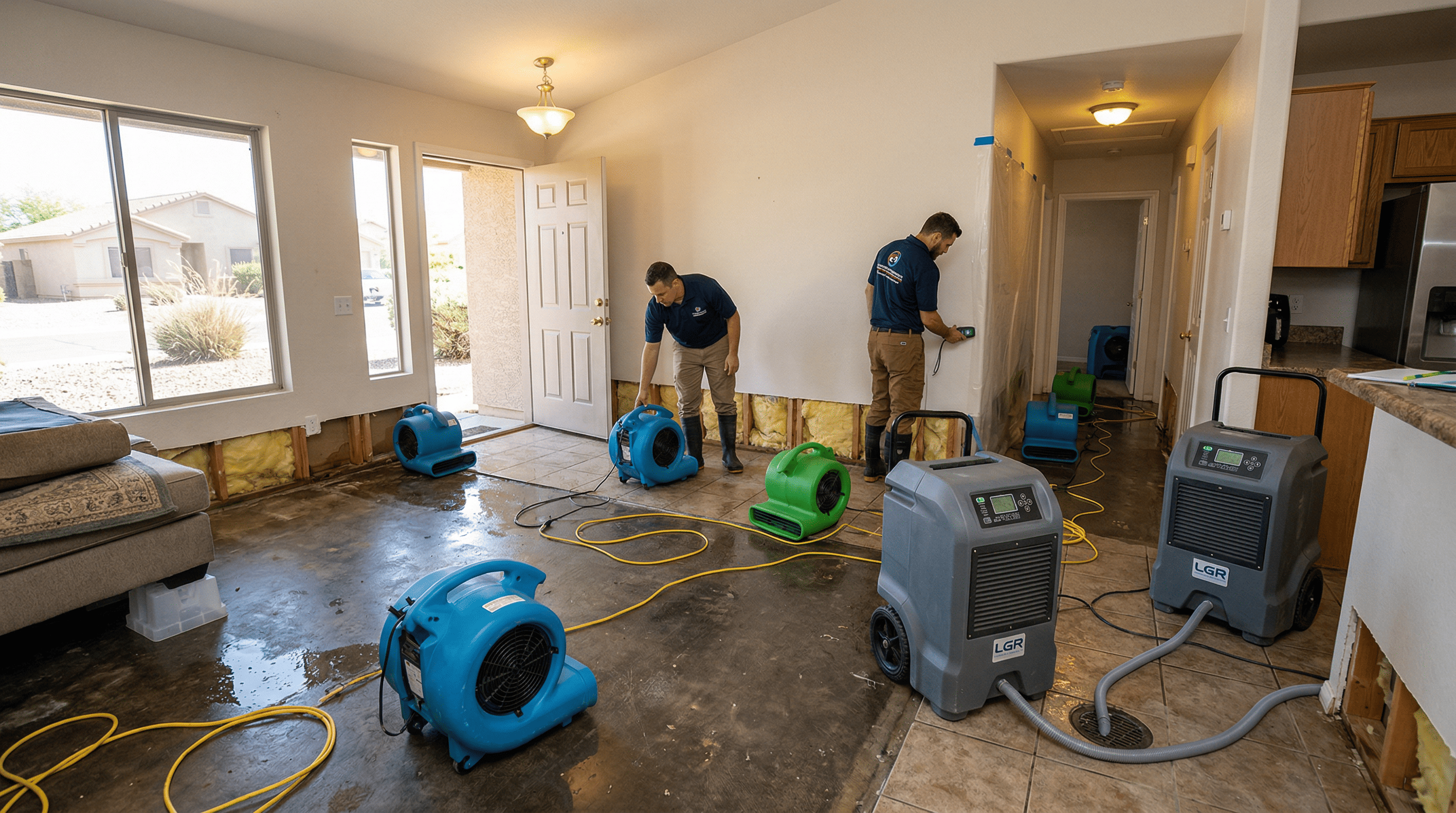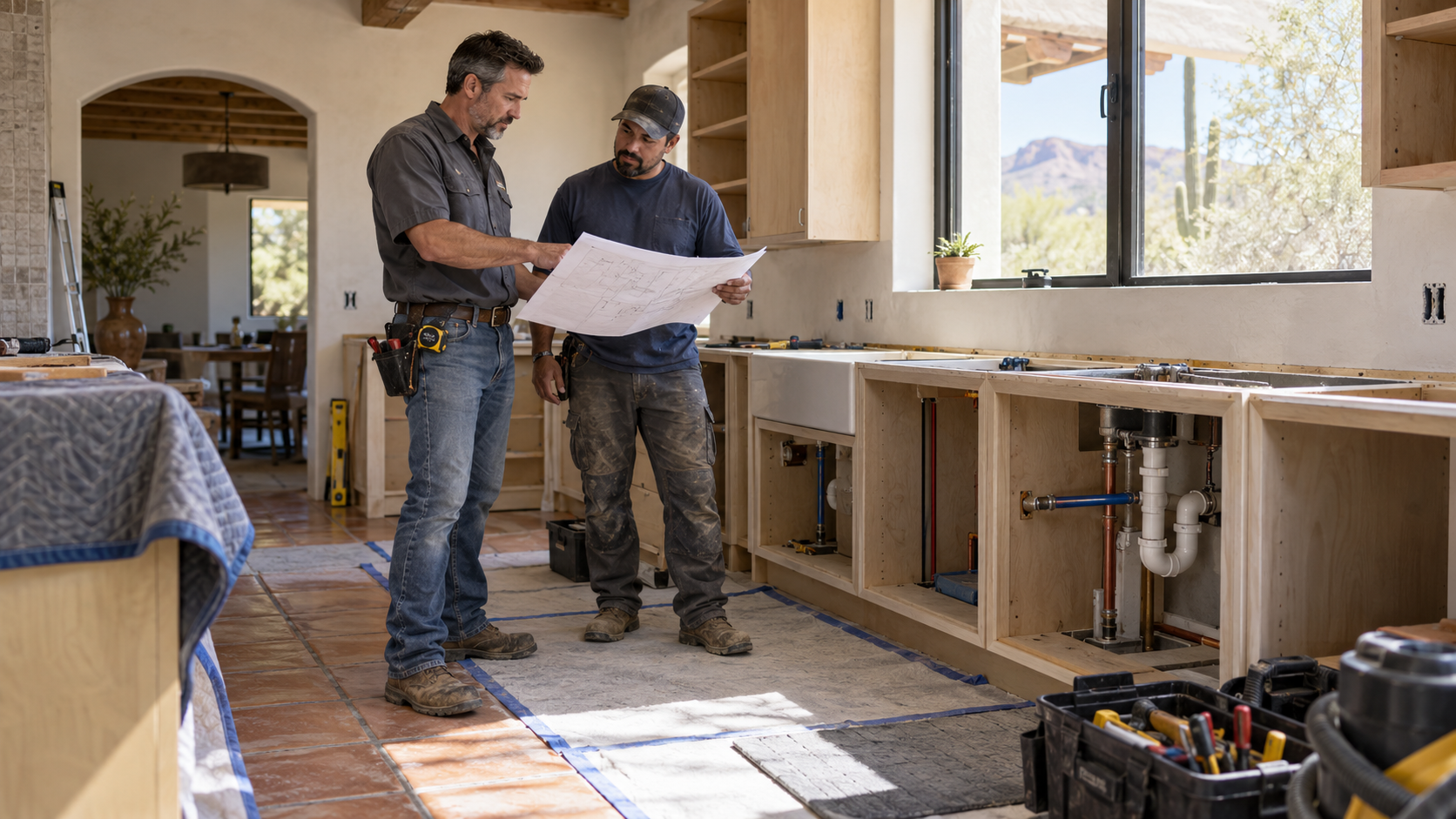
A plumbing emergency during a renovation can interrupt more than the water supply. It can affect unfinished walls, newly delivered cabinets, floor protection, neighboring rooms, and the sequence of work already booked with several trades. A leak that occurs while surfaces are open may be easier to investigate, but it still needs a controlled response and a clear repair plan.
For owners, the main challenge is deciding what can continue and what must pause. The project needs emergency source control, an assessment of any water damage, and a revised sequence that gives each trade access at the right time. This guide explains how to handle those decisions without covering up an unresolved problem or turning the incident into an unplanned remodel expansion.
Pause the affected work and establish a safe area
When water appears unexpectedly, stop work in the affected zone and alert the person managing the project. Keep workers and occupants away from standing water, exposed electrical components, damaged ceilings, or any area showing signs of instability. A renovation site already contains temporary arrangements, so do not assume the usual route to a switch or valve remains safe.
If a known water isolation point is reachable from a dry and safe location, an authorized person may be able to limit the release. Do not force a damaged valve or improvise a repair on a pressurized line. Do not cross water to access electrical equipment. An electrician or utility may need to address electrical isolation before the area can be investigated.
Keep children, pets, and visitors out of the work zone. If there is immediate danger, suspected gas leakage, or structural instability, leave and contact the appropriate emergency service or utility. The objective is to stabilize the incident safely. Saving a delivery appointment or finishing a scheduled installation is secondary to resolving a hazard.
Use the contractor as the coordination point
A general contractor coordinates the work sequence, but the relevant plumbing professional should diagnose and repair the plumbing system. The owner should know who is calling the plumber, who can authorize urgent stabilization, and how the other trades will receive updates. One coordination point reduces the chance of contradictory instructions reaching the worksite.
Record what was happening when the leak was discovered. Was a fixture being removed, a wall being opened, or the system being tested? Describe the observations without deciding who caused the incident. An accurate record helps the professionals assess the failure and allows any responsibility discussion to follow evidence instead of speculation.
Ask the contractor to identify the immediate plan, the decisions that require owner approval, and any existing work that must be protected. A short written update can distinguish emergency stabilization from a proposed change to the renovation scope. That distinction is useful when the incident leads to questions about cost, schedule, or improvements that were not in the original project.
Confirm the plumber's scope before resuming anything
The plumber needs the property location, safe access details, suspected area of failure, and the source status. Mention whether the relevant walls are open and whether other parts of the building remain occupied. If plans or photographs show the existing system, make them available through the project's normal process without assuming they are an exact record of concealed conditions.
After-hours service can be necessary if the release is uncontrolled or the property cannot safely remain in its present condition. The information provided by a 24/7 emergency plumber illustrates how emergency availability is presented. For the project itself, confirm the provider's actual service area, qualifications, and suitability for the system involved before arranging work.
Ask whether the immediate repair is temporary or complete. Establish what testing is required, who will perform it, and what must remain accessible. If a line will stay isolated while the project continues elsewhere, document that restriction and communicate it to every trade that might reconnect or use the system.
Inspect water damage before treating the site as dry
Open walls do not automatically make all moisture visible. Water may reach under floor protection, behind remaining cabinets, into insulation, or into the finished room below. The repair of a pipe does not confirm the condition of those materials. If the loss extends beyond a limited, readily assessed area, discuss appropriate restoration assessment.
Give the restoration team the source information, room layout, and list of newly installed materials. Identify any protective coverings or temporary partitions that may conceal the water path. The assessment should distinguish confirmed affected areas from areas still needing investigation. That gives the contractor a clearer basis for protecting work and revising the schedule.
Do not remove or cut concealed material without considering the wider assembly. Wiring, plumbing, structural elements, and existing building materials can affect safe access. If suspected contamination or mold is involved, tell the relevant professional before work creates dust or changes airflow. A measured assessment can be more useful than broad demolition driven only by frustration.
Make drying a real checkpoint in the schedule
Renovation schedules often depend on the next trade arriving as soon as an opening is ready. Water damage can add a checkpoint that was not in the original plan. Ask what materials need drying or removal, how progress will be measured, and what conditions must be met before finishes can be installed.
A drying plan should consider the actual materials and source, rather than use a universal time allowance. Surface appearance and touch alone do not establish the moisture condition of deeper layers. Ask the restoration team to explain the observations used for its recommendations, including relevant material readings and comparison areas.
Protect the drying setup from other work. Do not move equipment or change containment just to fit a delivery into the room. Discuss whether the team can adjust access safely. If unaffected work can continue, define that zone clearly and confirm that its dust, materials, and movement will not interfere with the assessment or drying method.
Avoid closing walls before testing and approvals
New drywall, tile, cabinets, and floor finishes can hide the exact areas that still need inspection. Before closing an opening, confirm that the source repair and relevant testing are complete, drying decisions have been addressed, and any required inspections are scheduled or finished. Local permit and inspection requirements depend on the actual project and authority.
Ask who is responsible for each signoff. The plumber confirms work within the plumbing scope; restoration addresses affected materials; the contractor coordinates the subsequent building work. Where structural concerns or specialist systems are involved, obtain the appropriate qualified assessment. A general statement that the site looks ready should not replace those responsibilities.
If an owner requests faster completion, explain what the skipped checkpoint would leave unresolved. The choice should be based on evidence and appropriate requirements, not simply a preference for a shorter interruption. A clear sequencing decision also helps avoid a second opening when a test or inspection later identifies unfinished work.
Separate incident repair from renovation upgrades
A leak may expose an older connection, inconvenient valve location, or worn finish that the owner wants to change. Those discoveries can be useful, but they should not automatically expand the project. List the work needed to address the incident separately from elective changes, and explain the costs and dependencies for each.
For example, replacing a damaged cabinet panel and redesigning the full cabinet run are different decisions. Likewise, repairing the source and relocating fixtures involve different planning. The owner needs enough detail to understand what restores the current arrangement and what creates a new one. Keep any proposed improvement documented through the normal change process.
Consider lead times and access when choosing materials. A replacement finish or appliance may alter dimensions and connection locations. Confirm those implications before ordering. Otherwise, a water incident can create a chain of rework that has little to do with the original leak and makes the revised schedule harder to explain.
Keep records that show what happened and what changed
Take photographs if the area is safe and the project manager permits access. Include the source area, adjoining spaces, and affected materials before removal. Record dates, source isolation, professional attendance, and decisions. Avoid guessing the age of a leak or assigning responsibility without the diagnostic evidence to support it.
Collect the plumbing repair notes, restoration assessment, drying records, revised scope, and any inspection documentation in the project file. Each record should identify the work it covers. This allows the next trade to understand what was tested and which areas remain restricted without relying on a verbal message passed through several people.
If insurance may be involved, contact the insurer and follow the policy's reporting instructions. Coverage and authorization depend on the actual circumstances and policy. Do not assume that an incident during construction or renovation is automatically covered. Discuss documentation needs and disposal decisions while continuing urgent safety and mitigation work as appropriate.
Address contamination without improvised cleaning
The water's source and contact history influence the cleanup method. A supply leak differs from sewage or other contaminated water. If the condition is uncertain, keep the area separated and ask a suitable professional to assess it. Do not ask a renovation crew to treat every loss as ordinary construction cleanup.
The EPA's mold cleanup guidance emphasizes fixing plumbing leaks, drying materials completely, and using experienced professionals for sewage or other contaminated-water damage. It also advises against painting over moldy surfaces. These principles are relevant when a remodel resumes: a new finish should follow appropriate assessment rather than disguise the unresolved condition.
People with health concerns should seek suitable advice before entering or participating in cleanup. Avoid unplanned chemical treatments, especially mixing products. The response needs to suit the actual loss and building conditions. If specialist remediation is necessary, make that scope part of the coordinated schedule so other work does not disrupt it.
Test the finished room and hand over usable information
At the end of the revised sequence, arrange the appropriate checks before normal use. Ask who will test fixtures, appliance connections, and drains within the completed work. Confirm that isolation points remain accessible and that no temporary measures have been left unrecorded. The handover should list unresolved items, if any, and the person responsible for each.
Give the owner the records needed to maintain the altered area. That may include product information, repair details, and photographs of accessible locations before finishes closed. Do not describe concealed systems as guaranteed against future leaks. Instead, explain the work completed, the tests performed, and what symptoms should prompt a professional review.
Review the incident as a project lesson. If an access problem, missing isolation information, or unclear authorization caused delay, update the working process. A practical emergency plan includes contact details and clear responsibility; it does not encourage occupants or workers to make unfamiliar repairs when qualified help is required.
Keep the renovation moving with a controlled restart
An emergency plumbing interruption needs a repair plan and a construction sequence that fit together. Stabilize the release safely, obtain the appropriate assessment, protect drying and testing access, and restart the affected work only after the relevant checkpoints. Keep incident repairs and optional improvements separate so the owner understands the revised project.
Koomen Contracting USA provides interior renovation and construction management services. If a plumbing incident interrupts a build or renovation, discuss source repair, affected materials, trade responsibilities, and the restart sequence with the project team. A clear coordination plan helps the work move forward without hiding the questions that still need an answer.
Easy steps to create a color palette
Lorem ipsum dolor sit amet, consectetur adipiscing elit lobortis arcu enim urna adipiscing praesent velit viverra sit semper lorem eu cursus vel hendrerit elementum morbi curabitur etiam nibh justo, lorem aliquet donec sed sit mi dignissim at ante massa mattis.
- Neque sodales ut etiam sit amet nisl purus non tellus orci ac auctor
- Adipiscing elit ut aliquam purus sit amet viverra suspendisse potent
- Mauris commodo quis imperdiet massa tincidunt nunc pulvinar
- Excepteur sint occaecat cupidatat non proident sunt in culpa qui officia
What is a color palette?
Vitae congue eu consequat ac felis placerat vestibulum lectus mauris ultrices cursus sit amet dictum sit amet justo donec enim diam porttitor lacus luctus accumsan tortor posuere praesent tristique magna sit amet purus gravida quis blandit turpis.

Don’t overspend on growth marketing without good retention rates
At risus viverra adipiscing at in tellus integer feugiat nisl pretium fusce id velit ut tortor sagittis orci a scelerisque purus semper eget at lectus urna duis convallis porta nibh venenatis cras sed felis eget neque laoreet suspendisse interdum consectetur libero id faucibus nisl donec pretium vulputate sapien nec sagittis aliquam nunc lobortis mattis aliquam faucibus purus in.
- Neque sodales ut etiam sit amet nisl purus non tellus orci ac auctor
- Adipiscing elit ut aliquam purus sit amet viverra suspendisse potenti
- Mauris commodo quis imperdiet massa tincidunt nunc pulvinar
- Adipiscing elit ut aliquam purus sit amet viverra suspendisse potenti
What’s the ideal customer retention rate?
Nisi quis eleifend quam adipiscing vitae aliquet bibendum enim facilisis gravida neque euismod in pellentesque massa placerat volutpat lacus laoreet non curabitur gravida odio aenean sed adipiscing diam donec adipiscing tristique risus amet est placerat in egestas erat.
“Lorem ipsum dolor sit amet consectetur adipiscing elit, sed do eiusmod tempor incididunt ut labore et dolore magna aliqua enim ad minim veniam.”
Next steps to increase your customer retention
Eget lorem dolor sed viverra ipsum nunc aliquet bibendum felis donec et odio pellentesque diam volutpat commodo sed egestas aliquam sem fringilla ut morbi tincidunt augue interdum velit euismod eu tincidunt tortor aliquam nulla facilisi aenean sed adipiscing diam donec adipiscing ut lectus arcu bibendum at varius vel pharetra nibh venenatis cras sed felis eget.