What Should You Do Immediately After Water Damage in Your Home?
Introduction
Immediately after water damage, you should stop the water source, ensure safety, and begin drying affected areas as quickly as possible. Acting within the first few hours can dramatically reduce repair costs and prevent mold growth.
Water damage spreads fast. Within minutes, it can soak walls and flooring. Within hours, it begins breaking down materials. Knowing exactly what to do right away can make the difference between a simple cleanup and a major restoration.
What should you do first after water damage?
Turn off the water source and electricity if safe to do so.
Stopping the flow of water and eliminating electrical hazards is the first priority to prevent further damage or injury.
If the damage is from a burst pipe or appliance leak, locate the shut-off valve immediately. If water is near outlets or wiring, avoid contact and turn off power at the breaker. Safety always comes before cleanup.
How quickly should you act after water damage?
You should act within the first 24 hours, ideally immediately.
The sooner you respond, the less damage your home will sustain.
Water begins penetrating porous materials like drywall and wood within minutes. After 24–48 hours, mold can begin forming. Quick action helps preserve structural integrity and reduces health risks.
Can you stay in a house with water damage?
It depends on the severity and type of water damage.
Minor clean water leaks may be manageable, but significant or contaminated water damage can make a home unsafe.
If the water is from sewage or flooding, it may contain harmful bacteria. Structural weakening, electrical hazards, and mold risk are also concerns. When in doubt, evacuate and consult professionals.
What should you avoid doing after water damage?
Avoid using electrical appliances, delaying cleanup, or ignoring hidden moisture.
These mistakes can worsen damage and increase costs.
Do not use vacuums or fans near standing water unless they are designed for wet conditions. Avoid waiting to “see if it dries.” Moisture trapped behind walls or under floors can lead to long-term issues.
Does water damage always lead to mold?
No, but it can if not addressed quickly.
Mold typically begins growing within 24 to 48 hours in damp environments.
Proper drying, ventilation, and dehumidification can prevent mold. Even if surfaces look dry, hidden moisture can still create the perfect conditions for growth.
Should you call a professional immediately?
Yes, especially for moderate to severe water damage.
Professionals have the equipment and expertise to properly extract water and dry your home.
While small spills can be handled yourself, larger incidents often require full-scale restoration. If you're dealing with a major incident, hiring a team that specializes in water damage restoration Phoenix services ensures faster drying, proper mitigation, and reduced long-term risk.
What items should you remove first?
Prioritize removing valuable and absorbent items.
This includes electronics, documents, furniture, and textiles.
Water can quickly ruin carpets, upholstery, and personal belongings. Move items to a dry area to prevent further damage and speed up the drying process.
How do you start drying your home?
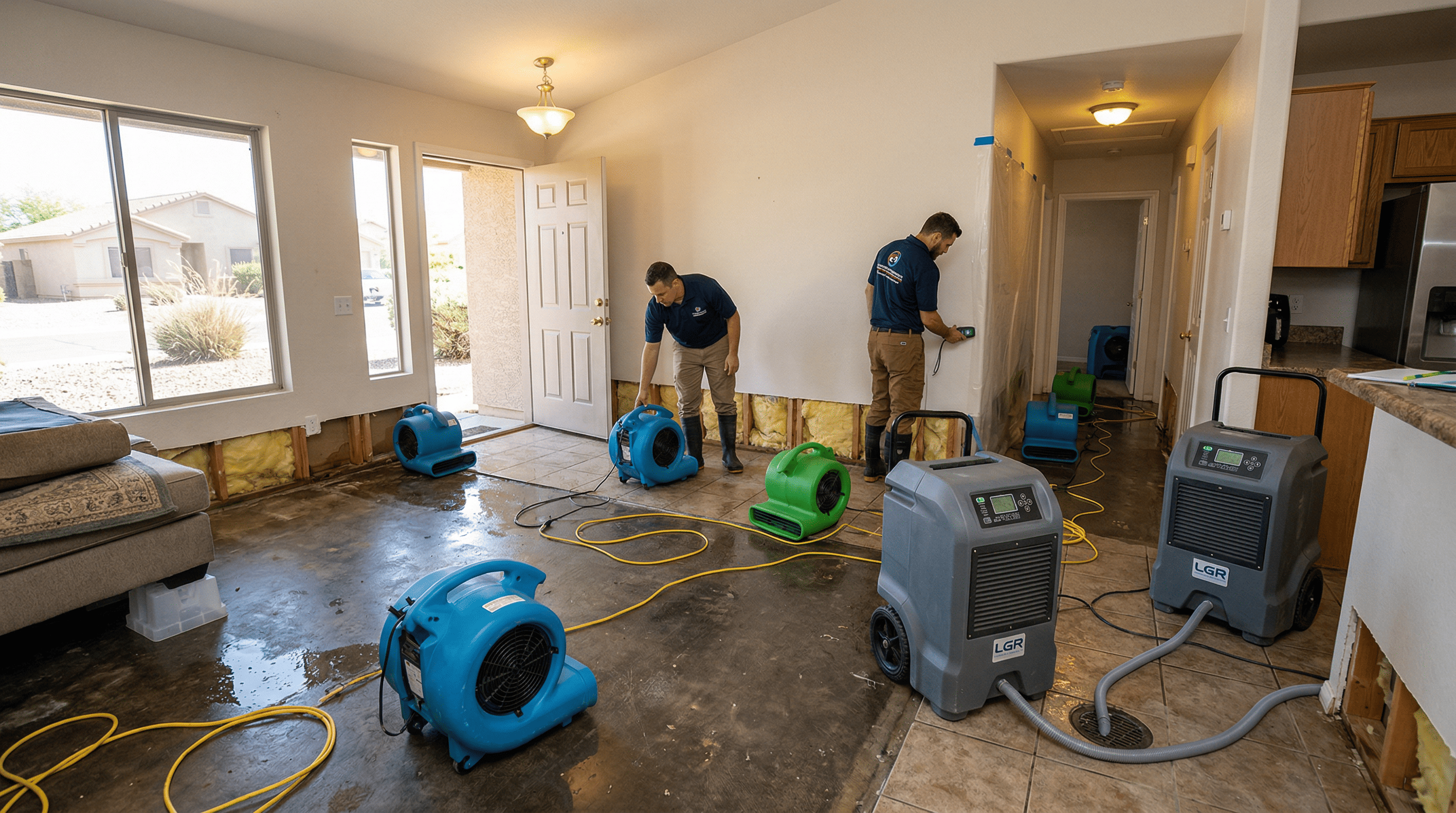
Use fans, dehumidifiers, and proper ventilation immediately.
Air circulation is key to removing moisture from affected areas.
Open windows if weather permits. Use high-powered fans and dehumidifiers to pull moisture from the air and materials. The goal is to dry everything as quickly as possible.
Can water damage affect your home’s structure?
Yes, prolonged exposure can weaken structural components.
Wood can warp, drywall can crumble, and foundations can shift.
Even minor water damage can escalate if left untreated. Structural damage often develops gradually, making early intervention critical.
Will insurance cover water damage?
It depends on the cause of the damage.
Most policies cover sudden and accidental damage, but not gradual leaks or neglect.
Review your policy and document the damage with photos. Acting quickly can also help strengthen your claim.
Top 10 Immediate Steps After Water Damage
- Shut off the water source
Stop additional water from entering your home to prevent further damage. - Turn off electricity
Reduce the risk of electrical hazards, especially in wet areas. - Ensure personal safety
Avoid contaminated water and unstable structures. - Document the damage
Take photos and videos for insurance purposes. - Remove standing water
Use pumps, wet vacuums, or towels to extract water quickly. - Move belongings to dry areas
Protect valuables and prevent further soaking. - Start the drying process
Use fans and dehumidifiers immediately. - Remove wet materials
Carpets, drywall, and insulation may need to be removed. - Disinfect affected areas
Prevent bacteria and mold growth. - Call a restoration professional
Ensure thorough drying and prevent hidden damage.
7 Best Ways to Prevent Further Water Damage
- Act immediately
Time is the most critical factor in minimizing damage. - Control humidity levels
Use dehumidifiers to keep moisture under control. - Increase airflow
Proper ventilation speeds up drying. - Inspect hidden areas
Check behind walls, under floors, and inside cabinets. - Use moisture meters if available
Ensure areas are fully dry, not just surface-level. - Dispose of unsalvageable materials
Prevent contamination and mold spread. - Monitor for mold signs
Musty odors or discoloration indicate hidden issues.
8 Things You Should Know About Water Damage
- It spreads faster than you think
Water can travel through walls and floors within minutes. - Not all water damage is visible
Hidden moisture is a major risk. - Mold can start quickly
Growth can begin within 24 hours. - Different water types matter
Clean, gray, and black water carry different risks. - Drying is more complex than it looks
Surface drying is not enough. - Insurance claims require documentation
Evidence is critical for approval. - Structural damage can develop silently
Issues may not appear immediately. - Professional help saves money long term
Proper restoration prevents bigger repairs later.
Conclusion
The most important thing to do after water damage is act fast. Stop the water source, ensure safety, and begin drying immediately. Every minute counts when it comes to protecting your home and preventing long-term damage.
Quick action can mean the difference between a minor cleanup and a major restoration project. If the damage is more than minor, bringing in professionals early can save time, money, and stress.
If you're unsure about the severity, it is always better to act quickly and get expert help rather than risk hidden damage getting worse.
Easy steps to create a color palette
Lorem ipsum dolor sit amet, consectetur adipiscing elit lobortis arcu enim urna adipiscing praesent velit viverra sit semper lorem eu cursus vel hendrerit elementum morbi curabitur etiam nibh justo, lorem aliquet donec sed sit mi dignissim at ante massa mattis.
- Neque sodales ut etiam sit amet nisl purus non tellus orci ac auctor
- Adipiscing elit ut aliquam purus sit amet viverra suspendisse potent
- Mauris commodo quis imperdiet massa tincidunt nunc pulvinar
- Excepteur sint occaecat cupidatat non proident sunt in culpa qui officia
What is a color palette?
Vitae congue eu consequat ac felis placerat vestibulum lectus mauris ultrices cursus sit amet dictum sit amet justo donec enim diam porttitor lacus luctus accumsan tortor posuere praesent tristique magna sit amet purus gravida quis blandit turpis.

Don’t overspend on growth marketing without good retention rates
At risus viverra adipiscing at in tellus integer feugiat nisl pretium fusce id velit ut tortor sagittis orci a scelerisque purus semper eget at lectus urna duis convallis porta nibh venenatis cras sed felis eget neque laoreet suspendisse interdum consectetur libero id faucibus nisl donec pretium vulputate sapien nec sagittis aliquam nunc lobortis mattis aliquam faucibus purus in.
- Neque sodales ut etiam sit amet nisl purus non tellus orci ac auctor
- Adipiscing elit ut aliquam purus sit amet viverra suspendisse potenti
- Mauris commodo quis imperdiet massa tincidunt nunc pulvinar
- Adipiscing elit ut aliquam purus sit amet viverra suspendisse potenti
What’s the ideal customer retention rate?
Nisi quis eleifend quam adipiscing vitae aliquet bibendum enim facilisis gravida neque euismod in pellentesque massa placerat volutpat lacus laoreet non curabitur gravida odio aenean sed adipiscing diam donec adipiscing tristique risus amet est placerat in egestas erat.
“Lorem ipsum dolor sit amet consectetur adipiscing elit, sed do eiusmod tempor incididunt ut labore et dolore magna aliqua enim ad minim veniam.”
Next steps to increase your customer retention
Eget lorem dolor sed viverra ipsum nunc aliquet bibendum felis donec et odio pellentesque diam volutpat commodo sed egestas aliquam sem fringilla ut morbi tincidunt augue interdum velit euismod eu tincidunt tortor aliquam nulla facilisi aenean sed adipiscing diam donec adipiscing ut lectus arcu bibendum at varius vel pharetra nibh venenatis cras sed felis eget.